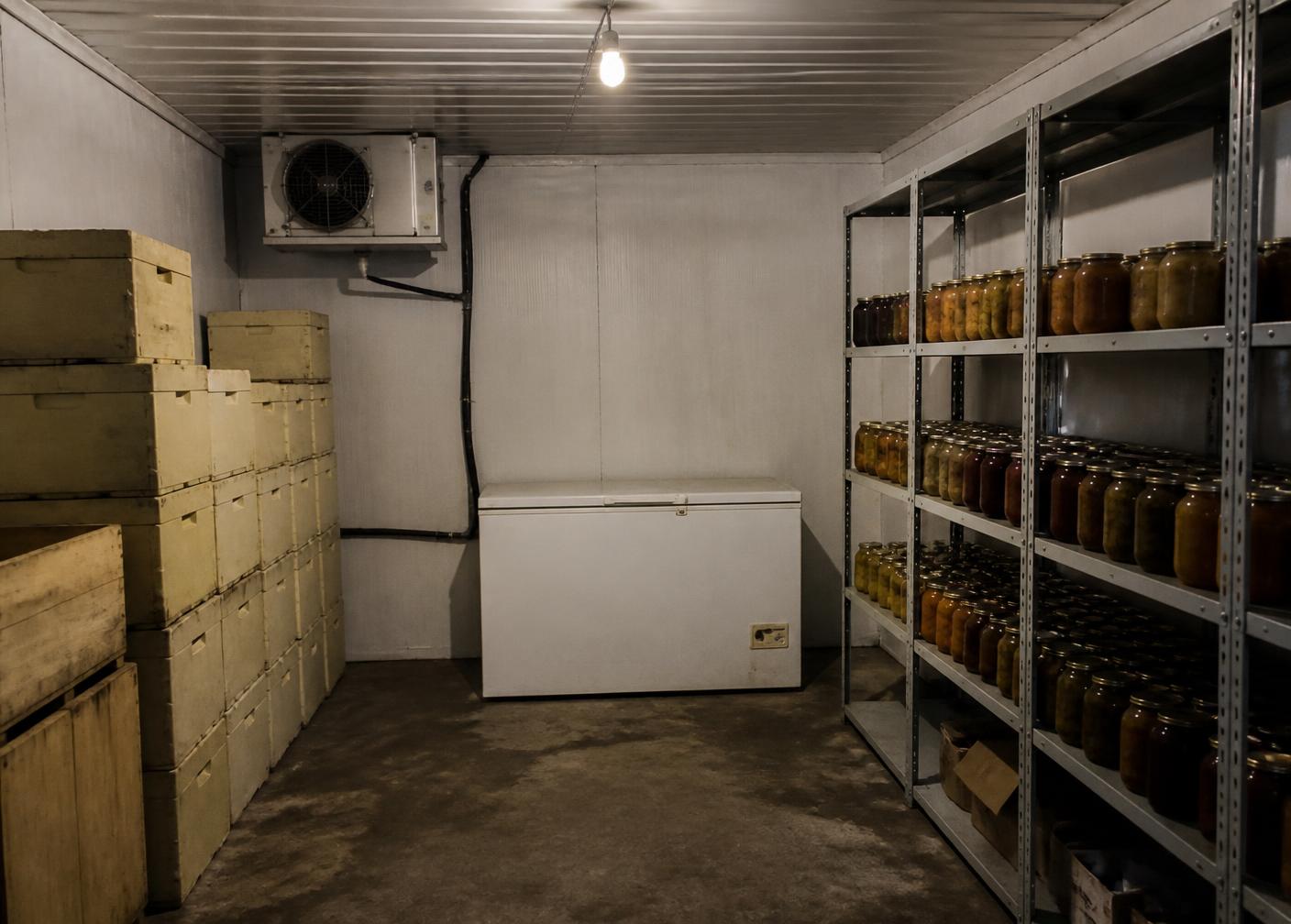
Lumpy and storable
Example: Beef, pork, grain, honey, firewood
Model: Held inventory
Arrives in one large quantity. Sits in cold or dry storage until drawn down.
The share primitive
Six steps. Each one depends on the one before it.
One steer, one field, one run of the kitchen. A known quantity with a known cost.
Quarter, half, full. Priced from the producer's actual cost plus margin, not from retail comparison.
Price locks at purchase. What the member pays in spring is what the food costs them, whatever happens to grocery prices later.
This is the part that matters. Working capital before planting, not after harvest.
Some goods are held; some are picked up on a schedule. Which is which depends on the product.
Every member sees what they've bought, taken, and have left. Nothing is guessed at either end.
The storage question
Example: Beef, pork, grain, honey, firewood
Model: Held inventory
Arrives in one large quantity. Sits in cold or dry storage until drawn down.
Example: Vegetables, eggs, dairy
Model: Pre-order, pickup window
Comes in steadily and won't wait. The share funds the season; the member chooses each pickup.
Example: Sauce, kraut, stock, preserves
Model: Either — this is the bridge
Shelf-stable output made from perishable input. Can be held like beef or ordered like produce.
A field of tomatoes may need to move in three weeks. Sauce can be drawn down in February. Conversion makes surplus useful instead of leaving the loss with the producer.
What this means for a producer