Our story

Foothold exists because the land and the lodging kept getting handed to different people.

One company cleaned the house. Another mowed the field. Nobody was accountable for the whole place. We built Foothold to hold both ends of that job in the same hands, in one corridor, at one standard.

Why this valley

The corridor from Banks down to McMinnville is an hour or so from a city of two and a half million people, and it still smells like a working landscape. Grass seed and hazelnuts on the valley floor. Vineyards on the red hills. Sheep on the wet pasture in February, fog sitting in the draws until eleven in the morning, gravel drives that turn to soup by December.

It is also full of buildings that are almost something — a farmhouse nobody lives in, a barn with power run to it, a cabin at the edge of a field that gets used twice a year. And it is full of owners who love the place and are quietly losing to it: the blackberry, the fence, the calendar, the endless small maintenance of rural property.

We work this corridor and nothing else. It means a maintenance call is a drive rather than a dispatch, that we know which county a parcel sits in and what that changes, and that the same crew is on the same roads every week.

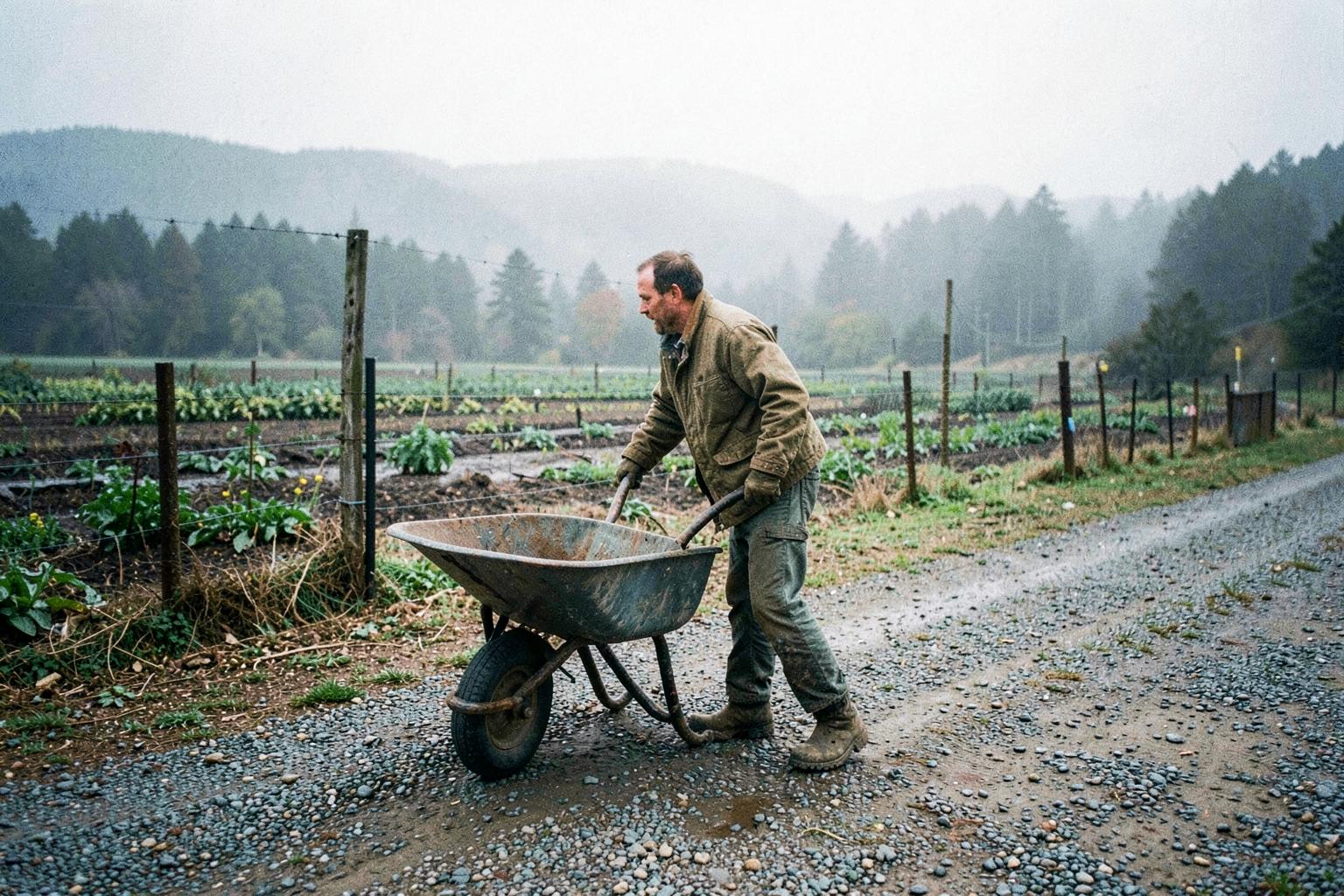
A person pushing a wheelbarrow along a gravel farm track past garden rows in the fog

How we think about land

Land is not scenery. It is a system with water moving through it, soil that either builds or thins, and plants that respond to what you do in a given month. Managed well, a pasture carries more animals, holds more rain and burns less readily every year. Left alone, it goes to blackberry and thistle and then to money.

So we write a plan per property and we work it by season: where the sheep go and when, what gets mown and what deliberately does not, when the orchard is pruned, which fence sections come first, where the water actually is in August. The plan is a document the owner keeps, and it gets reviewed every year against what the ground did.
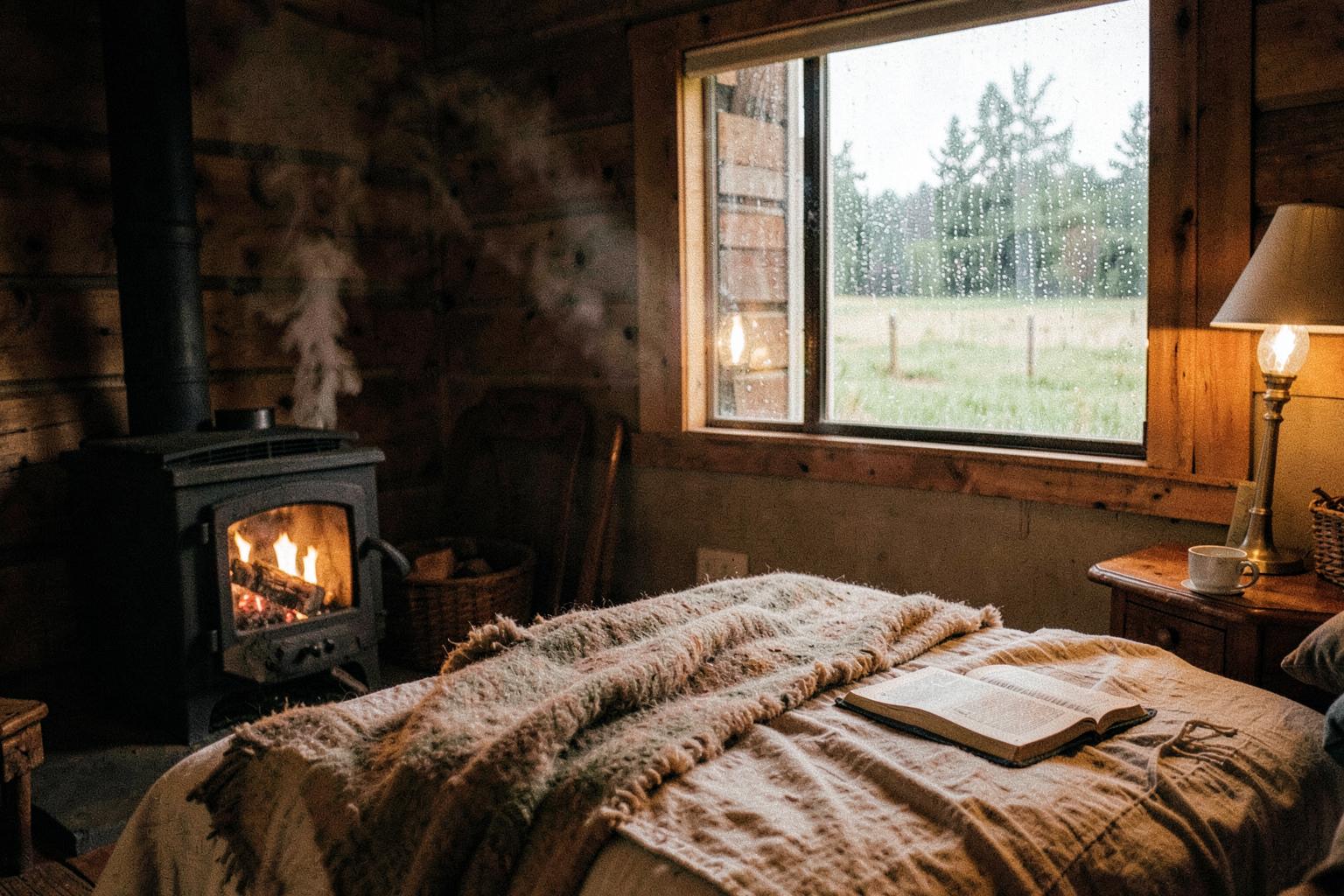
A warm cabin interior with a lit wood stove, wool blanket and rain on the window

How we think about guests

A guest drives out here to be somewhere specific. Our job is to make the place more itself, not less — the woodstove lit and the woodpile stocked, the gravel graded so a sedan makes the drive, a note on the counter about which gate to leave open and where the sheep will be in the morning.

Practically, that means answering messages inside the hour, turning a house over to a written standard, and blocking a night rather than sending someone into a half-ready room. Hospitality out here is mostly logistics done carefully, and then one or two things that feel like a gift.

What we won't compromise on

  • We don't overstate what we are.

    No property counts we haven't earned, no team we haven't hired, no reviews we didn't receive. An owner handing over an asset deserves a true answer to every question, including the unflattering ones.

  • We don't bundle the land away.

    Stewardship is priced on its own line because it is the first thing that gets quietly dropped when a manager is squeezed. If an owner declines it, that's a decision — not something that vanished into a percentage.

  • We don't send a guest into a house that isn't ready.

    A blocked night costs one night. A bad arrival costs the property's reputation for a year.

  • We don't guess at land use.

    Every property assessment includes a zoning and use screen. Where a question is genuinely close, we say so and point the owner to counsel rather than talk past it.

Who runs Foothold

Leadership

Foothold is led by its founder, Drew Keske, an operator whose background sits across the four things this work actually requires: livestock and pasture management, market gardening, event production, and running the business side of small organizations.

He grew up working his family's cattle ranch in north Texas — eleven seasons as a hand, then a year managing it: livestock, pasture, fence, water and infrastructure. He led the market garden at The Ecology Center in California, moving from apprentice to manager and running a three-person crew from seed to sale, and currently works in organic no-till vegetable production and CSA distribution. Alongside the field work he has carried the operating jobs a property needs — finance, legal and HR at a consumer brand, development and a 200-person anniversary event for an environmental nonprofit, a $250,000 event series with a team of four, and a ten-person field crew in Raleigh. He also works as an independent handyman, which is the least glamorous and most useful line on this page.

Field work, turnovers and trades are delivered with a small bench of local contractors in the corridor — cleaners, arborists, well and septic, fencing, gravel. We name them to owners during the proposal rather than on a public page.

[PLACEHOLDER — headshot to be added here.]

If this is how you'd want your place looked after, tell us about it.

For owners